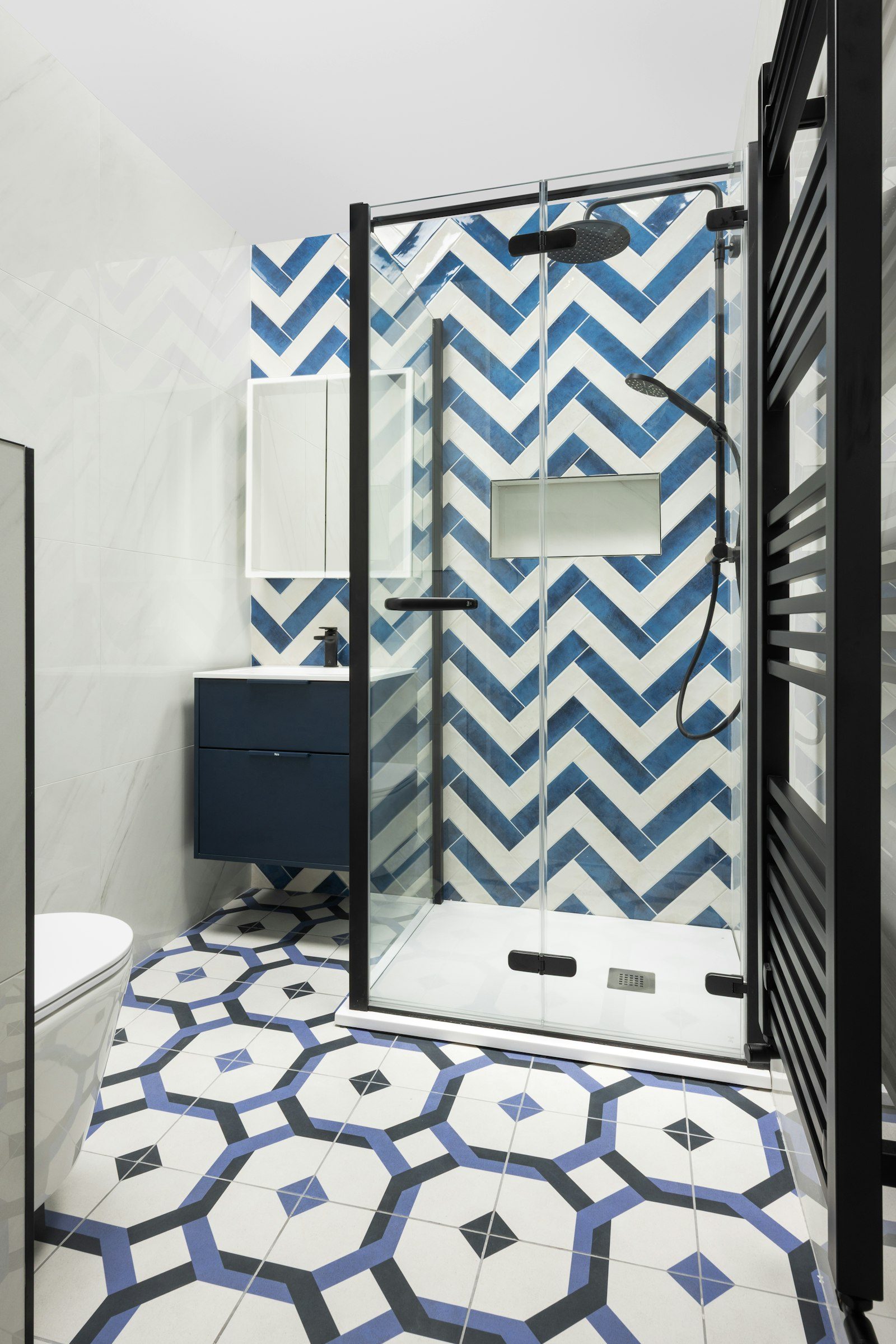
Tiling that looks right and stays right
Tiles are the most visible part of a bathroom, and the quality of the tiling is noticed every time you walk into the room. Straight, even grout lines, cuts in sensible places, a floor that drains properly and corners that are clean and neat all make a bathroom look finished and well made. Poor tiling, on the other hand, is hard to ignore: lippage you can feel underfoot, slivers of tile at the edges, water pooling in the corner of the shower, cracked grout within a year.
We tile bathrooms, ensuites, laundries and powder rooms across Moe, Newborough and the Latrobe Valley as part of our renovations. Good tiling starts long before the first tile is laid.
Planning the set-out
The set-out is the plan for where every tile goes. We work it out before tiling begins, considering:
- Where the cuts fall. Ideally, cut tiles are of a reasonable size and sit in less visible places, such as behind the door or under the vanity.
- Alignment. Grout lines on the floor and walls should line up where they meet, and wall tiles should align around the room.
- Niches, windows and fixtures. Shower niches, window reveals, mixers and the vanity should sit neatly within the tile pattern rather than cutting through it awkwardly.
- Floor falls. The floor must fall to the waste, and the tile size and drain type affect how well that works.
- Movement joints. Joints are placed where the standard and the tile manufacturer require them.
A good set-out is what makes tiling look effortless. It takes time and experience, and it is one of the things we discuss with you during the design.
Preparation beneath the tiles
Tiles need a flat, stable and waterproofed surface. Before tiling, we make sure:
- Floors are stiff and do not flex, which is particularly important on timber floors in older valley homes.
- Wall linings are flat and true, so large tiles sit evenly.
- Falls are formed correctly in the screed or substrate.
- The waterproofing membrane has been applied to AS 3740 and has fully cured.
If any of these is wrong, even the best tiler cannot produce a lasting result.
Choosing tiles
Porcelain
Porcelain is dense, hard-wearing and absorbs very little water, which makes it our usual recommendation for bathroom floors and showers. It comes in a vast range of looks, including stone, concrete, terrazzo and timber.
Ceramic
Glazed ceramic tiles are lighter and easier to cut, and they work well on walls. They come in many colours and finishes, including gloss and handmade-look subway tiles.
Natural stone
Marble, travertine and other stones are beautiful but need sealing, careful cleaning and more maintenance. They can scratch, stain and etch with acidic cleaners.
Mosaic
Small mosaic tiles suit shower floors because they follow falls easily and provide extra grip through the grout lines. They also work well as feature panels.
Large-format tiles
Large tiles mean fewer grout lines and a calmer look, but they require flat substrates and careful handling. They suit both floors and walls in many bathrooms.
Slip resistance
Bathroom floors and showers get wet, so slip resistance matters, especially for children and older people. Tiles are rated for slip resistance, and we recommend ratings suitable for wet bare-foot areas in showers. Matte, textured or smaller tiles generally provide better grip than large polished tiles.
Grout
Cement-based grout
Cement-based grout is common, quick to install and suits most walls. It is porous and can stain, so it benefits from sealing and gentle cleaning.
Epoxy grout
Epoxy grout is more resistant to stains, water and mould, and suits shower floors and busy family bathrooms. It requires more skill to install.
Colour
A grout colour close to the tile makes the surface look continuous. A contrasting grout highlights the pattern, which can work well with subway tiles or feature walls but shows imperfections more clearly.
Movement joints and sealant
Every building moves slightly with changes in temperature and moisture. If tiles are installed without allowance for that movement, they can crack or lift. Movement joints, filled with flexible sealant rather than grout, are placed at internal corners, changes of plane, junctions with other materials and at intervals across larger floors. We follow the requirements of the standard and the tile manufacturer.
Tiling patterns and features
- Stack bond: tiles laid in a straight grid, giving a clean, modern look.
- Brick bond: each row offset by half or a third of a tile, a classic pattern for subway tiles.
- Herringbone and chevron: timeless patterns for floors or feature walls.
- Vertical laying: rectangular tiles laid vertically to make a room feel taller.
- Feature walls: a different tile behind the vanity or in the shower to add interest.
- Niches: recessed shelves in the shower, tiled to align with the surrounding pattern.
Tiling in older homes
Many bathrooms in post-war Moe and Newborough homes have small tiles on walls that are no longer flat and floors that have moved. Laying new tiles in these rooms requires straightening walls, replacing linings and strengthening floors. In homes built before 1990, old wall sheeting may contain asbestos, which must be tested before removal. These steps take time, but they make the difference between tiling that lasts and tiling that cracks within a few years.
Caring for your tiles
- Use pH-neutral cleaners; avoid acids and bleach, which can damage grout and sealant.
- Squeegee shower walls after use to reduce soap scum and mould.
- Run the exhaust fan during and after showers.
- Check silicone joints each year and replace them if they crack or discolour.
- Reseal cement-based grout and natural stone as recommended.
At handover, we provide care instructions for the specific tiles and grout in your bathroom.
Our process
Tiling is part of a complete renovation process: consultation, design and selections, a written scope, strip-out and structural repairs, rough-in, waterproofing to AS 3740, tiling, fit-off and handover. Because we control every stage, we know the surface beneath the tiles is right.
Common tiling problems we fix
Many of the bathrooms we renovate show the same tiling faults:
- Lippage, where the edges of neighbouring tiles sit at different heights, usually because the substrate was not flat or the tiles were not levelled.
- Ponding, where water sits on the shower floor because the falls were poorly formed.
- Cracked tiles running in a line, often caused by floor movement or a missing movement joint.
- Hollow tiles, where the adhesive did not cover the back of the tile fully, leaving voids that can crack under load.
- Grout in corners, which cracks as the building moves and lets water reach the bedding.
- Thin slivers of cut tile at the edges of the room, because the set-out was not planned.
Each of these is avoidable with good preparation, the right adhesive and full coverage, a planned set-out and attention to movement joints.
Adhesives and bedding
The adhesive used to fix tiles must suit the tile type and size, the substrate and the wet conditions of a bathroom. Large and heavy tiles need adhesives designed for them and full coverage on the back of the tile, often achieved by back-buttering each tile as well as spreading adhesive on the surface. On timber floors, flexible adhesives accommodate small movements. We choose adhesives to suit each job and follow the manufacturer’s instructions.
Matching tiles to the rest of the home
Bathroom tiles do not have to match the rest of the house, but they should feel at home in it. In a post-war weatherboard, handmade-look subway tiles, simple hexagon mosaics or terrazzo can suit the era. In a modern home, large-format porcelain in stone or concrete looks may sit more comfortably. We help you choose tiles that suit both the room and the character of your house.
Setting out before the first tile
Good tiling starts on paper. Before any adhesive is mixed, the tiler plans the layout so cuts are balanced on both sides of each wall, tile joints line up with niches, windows and the vanity, and no thin slivers end up at edges or around the floor waste. Grout lines on walls and floors are aligned where possible so the room reads as one design. This setting-out takes time, but it is the difference between a bathroom that looks crafted and one that looks pieced together. It matters even more with large-format tiles and patterns such as herringbone, where small errors are easy to see.
Book a design consultation
If you are planning a new bathroom, ensuite or laundry and want tiling done properly, book a design consultation. We will visit your home in Moe or a nearby town, talk through tile choices and set-out and prepare a written scope for the full project.
Areas we service
- Erica
- Hill End
- Moe South
- Moe
- Morwell
- Narracan
- Newborough
- Tanjil South
- Thorpdale
- Trafalgar
- Westbury
- Willow Grove
- Yallourn North
- Yarragon
Book a design consultation
Tell us about your bathroom and we will visit to measure, talk through ideas and prepare a clear written scope for your home.
Book a design consultation