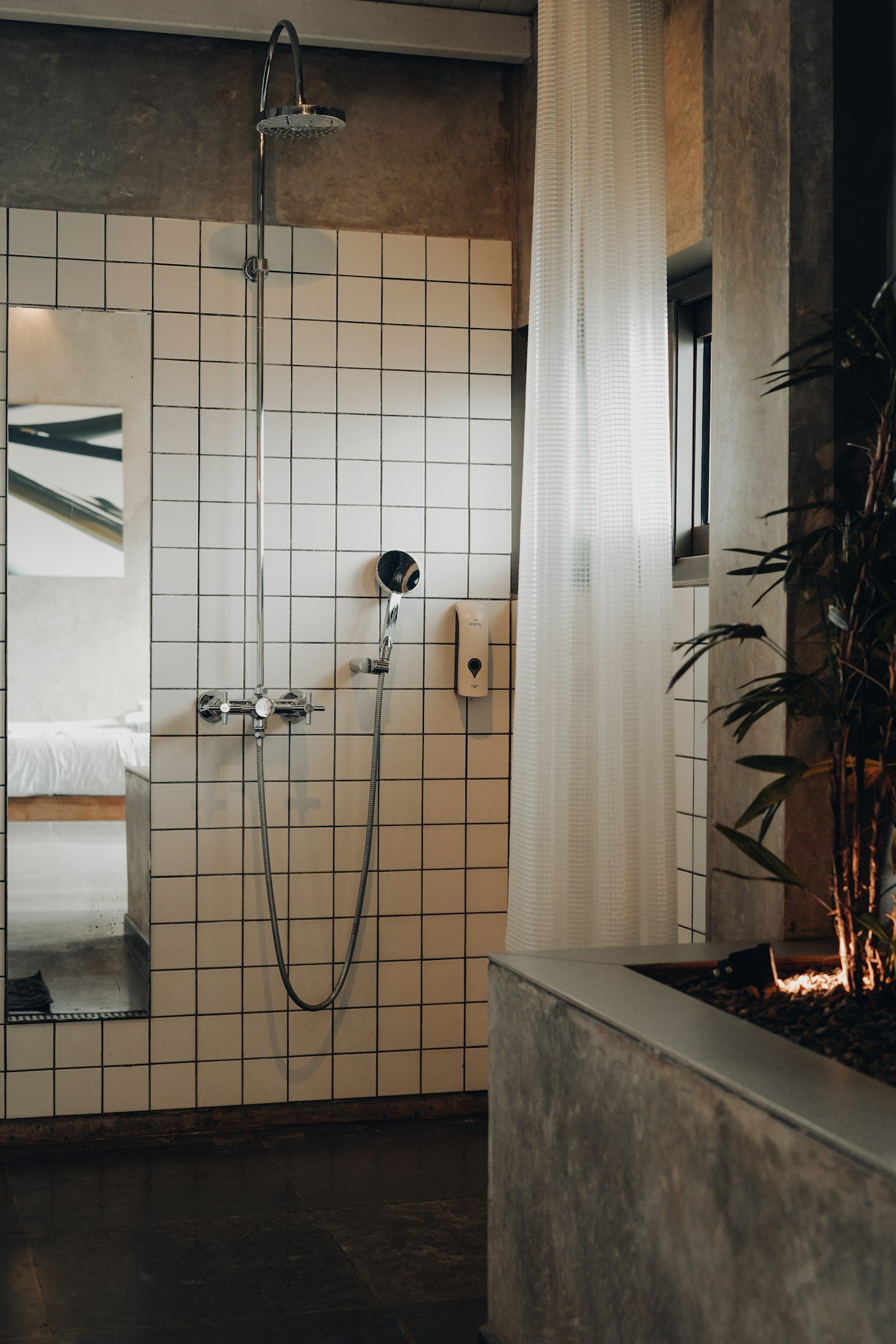
The layer that decides whether a bathroom lasts
Tiles are not waterproof, and neither is grout. Every bathroom, ensuite, laundry and powder room depends on a waterproofing membrane hidden beneath the tiles to keep water out of the floor, walls and framing. When that membrane is properly designed and installed, a wet area can last for decades. When it is not, water escapes slowly into the structure, and the damage often goes unnoticed until it is extensive.
Waterproofing is the stage of a renovation we take most seriously. Every wet area we build in Moe, Newborough and the surrounding towns is waterproofed to Australian Standard AS 3740, and every stage is photographed and documented.
What AS 3740 covers
AS 3740 is the Australian Standard for waterproofing domestic wet areas. In plain terms, it sets out:
- Which areas must be waterproofed, such as shower floors and walls, bathroom floors, walls behind baths and laundry floors with floor wastes.
- How high and how far the membrane must extend in each area, including above the shower rose and outside the shower.
- How junctions are treated, including bond breakers at internal corners and between walls and floors so the membrane can accommodate movement.
- How penetrations are sealed, such as tapware, shower outlets and pipes passing through the membrane.
- How the floor waste is connected, using a puddle flange bonded to the membrane.
- Floor falls, so water drains to the waste instead of pooling or spreading.
- Movement joints, so tiles and membranes can accommodate the small movements every building experiences.
The standard sets the minimum. We meet it on every job, and in many cases we go further, such as waterproofing the whole floor of a bathroom with a step-free shower.
Our waterproofing process
Substrate preparation
The membrane can only be as good as the surface it sits on. We make sure floors are stiff and stable, wall linings are suitable for wet areas and securely fixed, and surfaces are clean, dry and sound. On timber floors, we pay particular attention to framing and substrate, because a floor that flexes will eventually crack the membrane and tiles.
Falls
Shower floors must fall correctly to the waste. We form falls in the screed or substrate so water drains reliably, whether to a centre waste or a linear drain.
Priming
Surfaces are primed with a primer compatible with the membrane, so it bonds properly.
Bond breakers and corners
Bond breakers are installed at internal corners and wall-floor junctions, allowing the membrane to stretch slightly when the building moves rather than tearing.
Puddle flanges and penetrations
A puddle flange is installed at the floor waste and bonded into the membrane. Tapware, shower outlets and other penetrations are sealed with compatible collars or sealant.
Membrane application
The membrane is applied in the specified number of coats, to the required thickness, extending to the heights and areas the standard requires. Each coat is allowed to dry before the next.
Curing
The membrane is left to cure fully before tiling, following the manufacturer’s instructions. Rushing this step is one of the most common causes of membrane failure.
Inspection and documentation
We inspect the membrane before tiling and photograph each stage. At handover, you receive the photographs and a compliance certificate.
Waterproofing on timber floors
A large share of homes in Moe, Newborough, Yallourn North and Morwell are built on stumps with timber floors. These floors move more than slabs, particularly as seasons change and moisture levels vary. Waterproofing over timber requires a stable substrate, well-fixed sheeting and careful attention to joints and junctions. We check and strengthen the floor framing before waterproofing, because the best membrane will fail if the floor beneath it flexes.
Waterproofing on concrete slabs
Slab floors are more stable, but they still need correct falls, priming and a full membrane in wet areas. Where a shower needs to be recessed for a step-free entry, the slab may need to be cut and re-formed. Older slabs sometimes have uneven surfaces or residue from earlier floor coverings that must be removed before waterproofing.
Laundries and powder rooms
Laundries with a floor waste must be waterproofed to the standard, along with walls behind the tub. Powder rooms and separate toilets may also need waterproofing depending on the fixtures and whether there is a floor waste. We follow the standard for each room.
What goes wrong when waterproofing is skipped
We regularly see the results of waterproofing that was poorly done or never done:
- Rotted bottom plates and joists under showers.
- Mould in wall cavities and adjoining rooms.
- Tiles that lift and crack as the substrate swells.
- Swollen cabinetry and skirting outside the bathroom.
- Water staining in rooms below, in two-storey homes.
Repairing this damage usually means removing the tiles and rebuilding the wet area properly. It is far better to get the waterproofing right the first time.
Waterproofing as a stand-alone service
Most of our waterproofing is part of a full renovation, shower conversion or leaking shower repair. We do not apply membranes over existing tiles or sell surface sealers as a substitute for a membrane. A lasting result requires the membrane to be applied to a prepared substrate beneath the tiles, so waterproofing always involves removing the existing finishes in the affected area.
Your documentation
At handover, you receive:
- Photographs of the substrate, bond breakers, puddle flange and membrane at each stage.
- A waterproofing compliance certificate.
- Product information for the membrane used.
Keep these with your home’s records. They are useful if you sell the house, make an insurance claim or carry out future work.
Common waterproofing questions
Can a membrane be applied over existing tiles?
No. A lasting membrane must be applied to a prepared substrate beneath the tiles. Products marketed as sealers for grout and tiles may slow water entry for a time, but they are not a substitute for a membrane.
How long does a membrane take to cure?
It depends on the product, the number of coats, temperature and humidity. In cold, damp valley weather, curing can take longer. We follow the manufacturer’s instructions and never tile over a membrane that has not cured.
Do I need waterproofing outside the shower?
AS 3740 requires waterproofing of the bathroom floor in many situations, and with step-free showers, the waterproofed area often extends across the whole room. We follow the standard and explain what is required for your bathroom.
Is waterproofing different for a laundry?
The principles are the same, but the required areas differ. Laundries with a floor waste need the floor waterproofed and falling to the waste, and walls behind the tub need protection.
How do I know the waterproofing was done properly?
Ask for photographs of each stage and a compliance certificate. We provide both on every job, so you have a record of work that is otherwise hidden behind the tiles.
Why we document everything
Waterproofing is invisible once a bathroom is finished. Without photographs, there is no way to know whether the membrane was applied correctly, whether the bond breakers are in place or whether the puddle flange was installed. Documentation protects you, and it holds us to a high standard on every job.
Waterproofing in cold, damp weather
Waterproofing membranes need time to dry between coats and to cure before tiling. In the Latrobe Valley’s cold, humid winters, that time can be longer than in summer. We follow manufacturers’ guidance closely and allow extra time when conditions require it, rather than tiling over a membrane that is not ready. On timber floors, which move with seasonal changes in humidity, we pay particular attention to bond breakers at junctions and the stiffness of the floor structure. These details are invisible once the bathroom is finished, but they are what keep water out of the structure for years to come.
Book a design consultation
If you are planning a renovation, or you suspect the waterproofing in your existing bathroom has failed, book a design consultation. We will visit your home in Moe or a nearby town, inspect the wet areas and explain how we will waterproof your new bathroom to AS 3740.
Areas we service
- Erica
- Hill End
- Moe South
- Moe
- Morwell
- Narracan
- Newborough
- Tanjil South
- Thorpdale
- Trafalgar
- Westbury
- Willow Grove
- Yallourn North
- Yarragon
Book a design consultation
Tell us about your bathroom and we will visit to measure, talk through ideas and prepare a clear written scope for your home.
Book a design consultation