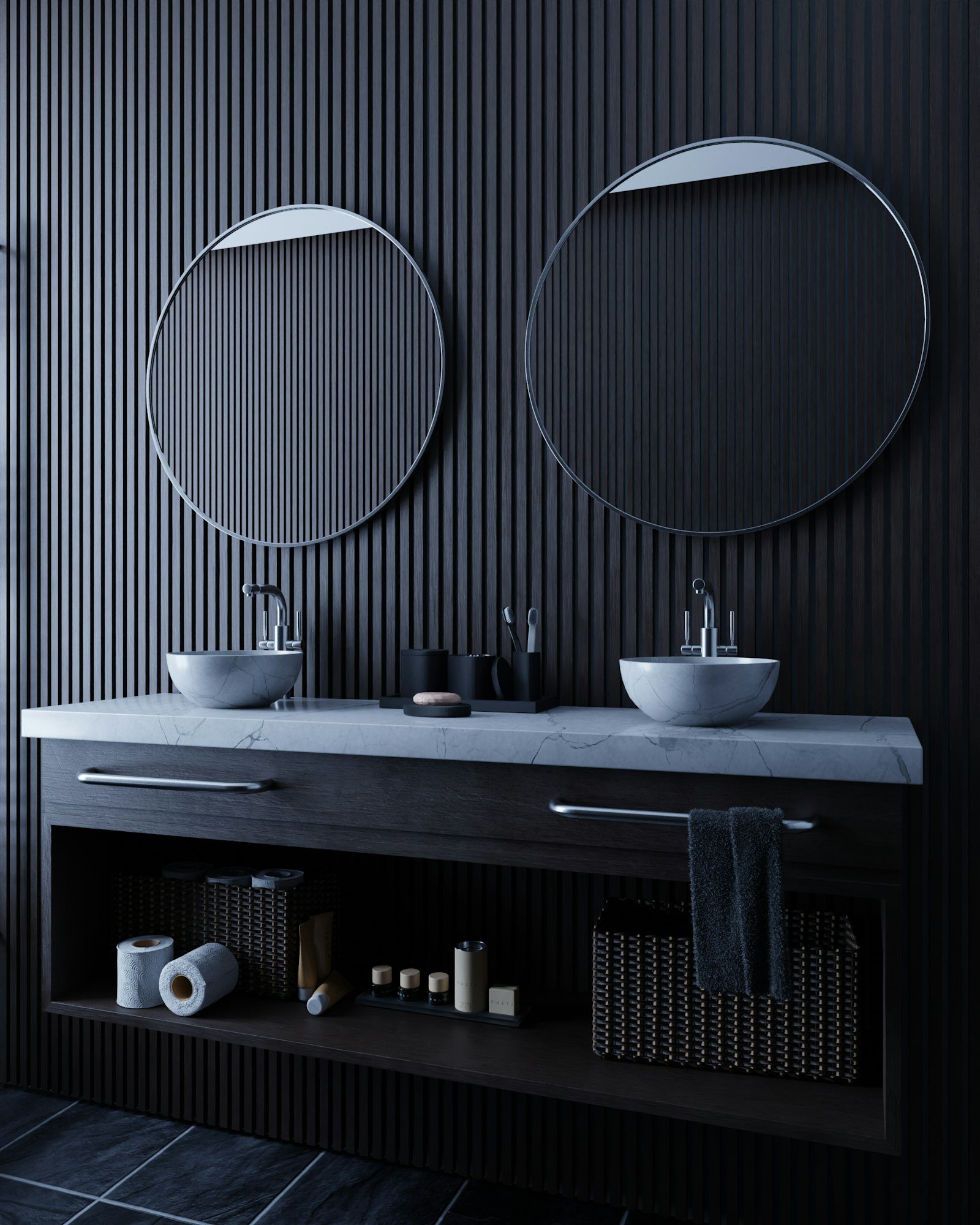
Somewhere for everything
Ask most people what they would change about their bathroom, and storage comes near the top of the list. In older homes around Moe, Newborough and Yallourn North, bathrooms often have a single cupboard under the basin, a mirror with no cabinet behind it and nowhere to keep towels. Bottles crowd the edge of the bath, toiletries cover the bench and cleaning products sit on the floor. A well-designed vanity and storage plan clears all of that away.
We design and install vanities, shaving cabinets, shower niches, linen storage and accessories as part of our bathroom, ensuite and powder room renovations.
Choosing a vanity
Wall-hung vanities
Wall-hung vanities float above the floor, which makes a room feel larger and makes cleaning the floor easier. They suit modern and transitional bathrooms and work well in small rooms. They must be fixed to solid blocking in the wall, which we install during the renovation.
Floor-standing vanities
Floor-standing vanities sit on legs or a plinth and often provide more storage height. They suit traditional and farmhouse-style bathrooms and can be useful where the wall structure makes wall-hanging difficult.
Drawers or doors
Drawers are almost always more practical than doors. They let you see and reach everything without kneeling down and digging to the back of a cupboard. A vanity with two or three deep drawers usually holds far more than one with doors. The top drawer may need a cut-out around the plumbing, which we plan for.
Width and depth
The vanity should suit both the room and the household. A family bathroom may benefit from a wider vanity with two basins. A small ensuite may need a narrower vanity with a deep top drawer. We check clearances to doors, toilets and showers so drawers can open fully.
Basins
Options include:
- Integrated basins, moulded into the top, with no joins to collect grime.
- Undermount basins, fixed below a stone top, easy to wipe into.
- Semi-recessed basins, which sit partly above the top and suit shallower vanities.
- Above-counter basins, which sit on the top and create a feature, but need a suitable tap height and are a little harder to clean around.
Tops
Engineered stone, solid surface and porcelain tops are durable, water-resistant and easy to clean. Timber tops are warm and attractive but need sealing and care.
Materials
Vanities in a bathroom must cope with steam and splashes. Moisture-resistant board, sealed edges, quality hinges and soft-close drawer runners make a large difference to how long a vanity lasts.
Mirrors and shaving cabinets
Recessed shaving cabinets
A shaving cabinet recessed into the wall between studs provides storage without taking up space in the room. It is one of the most useful additions to a small bathroom and is best planned before the walls are lined.
Surface-mounted cabinets
Where recessing is not possible, a surface-mounted mirrored cabinet still provides useful storage.
Mirrors
A large mirror, or one the full width of the vanity, reflects light and makes the room feel larger. Backlit or illuminated mirrors can provide even task lighting at the face.
Demisting
Mirror demister pads keep part of the mirror clear of steam after a shower.
Shower niches
A recessed niche in the shower wall keeps bottles and soap off the floor and out of sight. We plan niches to align with the tile layout and position them where they are easy to reach but not directly in the spray. Larger niches can hold several bottles; a long horizontal niche across the back wall can suit families.
Linen and tall storage
Where space allows, a tall cabinet or linen cupboard provides room for towels, spare toiletries and cleaning supplies. In some homes, a linen cupboard in an adjoining hallway can be opened into the bathroom or reorganised during the renovation.
Towel rails and hooks
Every bathroom needs somewhere to hang towels to dry. Heated towel rails dry towels quickly and add warmth, which is valuable through the damp valley winter. Hooks are useful where wall space is limited. Robe hooks near the shower and a hand towel rail near the basin complete the plan.
Accessories
Toilet roll holders, soap dishes, shelves and hooks should be positioned where they are useful and fixed to solid blocking. We plan their positions in the design and install them at fit-off, matching the finish to the tapware where possible.
Storage for different households
Families
Families need storage for multiple people, bath toys, medicines and cleaning products. Lockable or high storage keeps medicines and chemicals out of reach of children.
Couples
A double vanity or two sets of drawers can give each person their own space.
Older people
Storage at a comfortable height, drawers rather than low cupboards and easily reached shelves reduce bending and stretching.
Guest bathrooms
A powder room or guest bathroom may need only modest storage, but a small cabinet for spare toilet rolls and hand towels is still useful.
Replacing a vanity on its own
Sometimes a vanity can be replaced without a full renovation, especially if the rest of the bathroom is in good condition. The new vanity may be a different size from the old one, though, which can expose gaps in tiling or require plumbing changes. Removing an old vanity sometimes reveals water damage behind it. We assess this at the consultation and explain the options honestly.
Our process
Vanities and storage are part of our renovation process: consultation, design and selections, written scope, strip-out, structural work and blocking, rough-in, AS 3740 waterproofing, tiling, then installation of the vanity, cabinets and accessories at fit-off, followed by handover.
Planning storage around what you keep
Before choosing a vanity, it helps to take stock of what lives in the bathroom. We often suggest a quick audit before the consultation:
- Daily items, such as toothbrushes, skincare, razors and hair products, which need to be within easy reach.
- Weekly items, such as cleaning products, spare toiletries and first aid supplies, which can sit higher or lower.
- Bulky items, such as hair dryers, straighteners and electric toothbrush chargers, which need a drawer with power nearby or a dedicated spot.
- Towels and linen, which need a cupboard or shelf close to the bathroom.
- Children’s items, such as bath toys, which need somewhere to drain and dry.
Knowing what you keep lets us size drawers, choose internal organisers and position power points so the bench stays clear.
Power and lighting in storage
A power point inside a vanity drawer or shaving cabinet lets you keep an electric toothbrush or shaver charging out of sight. Lighting inside a shaving cabinet or under a wall-hung vanity adds a soft glow at night. These must be installed by a licensed electrician to suit wet-area requirements and are best planned during design.
Vanities in older valley homes
In post-war Moe and Newborough homes, the walls behind old vanities are often out of plumb, the plumbing may come up through the floor rather than the wall, and the floor beneath may have suffered water damage from years of splashes and slow leaks. A wall-hung vanity may need the plumbing relocated into the wall, and solid blocking added between studs. These are straightforward to handle during a renovation and make a big difference to the finished look.
Keeping storage looking good
Wipe up water on vanity tops and around basins promptly, especially at joins and edges. Use gentle cleaners suited to the top material. Keep drawer contents dry, and run the exhaust fan so steam does not linger in cabinets. With these simple habits, quality cabinetry will stay in good condition for many years.
Planning storage around routines
Good bathroom storage starts with how the household uses the room. We ask where toothbrushes, hair tools, medicines, cleaning products and spare towels currently end up, and design storage to suit. Drawers with internal organisers keep small items tidy. A drawer with a power point inside keeps hair tools off the bench. A recessed shaving cabinet hides daily items at eye level. A tall cabinet beside the vanity holds towels and bulk supplies. Lockable storage keeps medicines away from children. In older valley homes, where bathrooms are often narrow, recessing storage into wall cavities adds capacity without taking floor space.
Book a design consultation
If your bathroom needs more storage and a better vanity, book a design consultation. We will visit your home in Moe or a nearby town, look at what you need to store and design a vanity and storage plan that keeps the room clear and calm.
Areas we service
- Erica
- Hill End
- Moe South
- Moe
- Morwell
- Narracan
- Newborough
- Tanjil South
- Thorpdale
- Trafalgar
- Westbury
- Willow Grove
- Yallourn North
- Yarragon
Book a design consultation
Tell us about your bathroom and we will visit to measure, talk through ideas and prepare a clear written scope for your home.
Book a design consultation