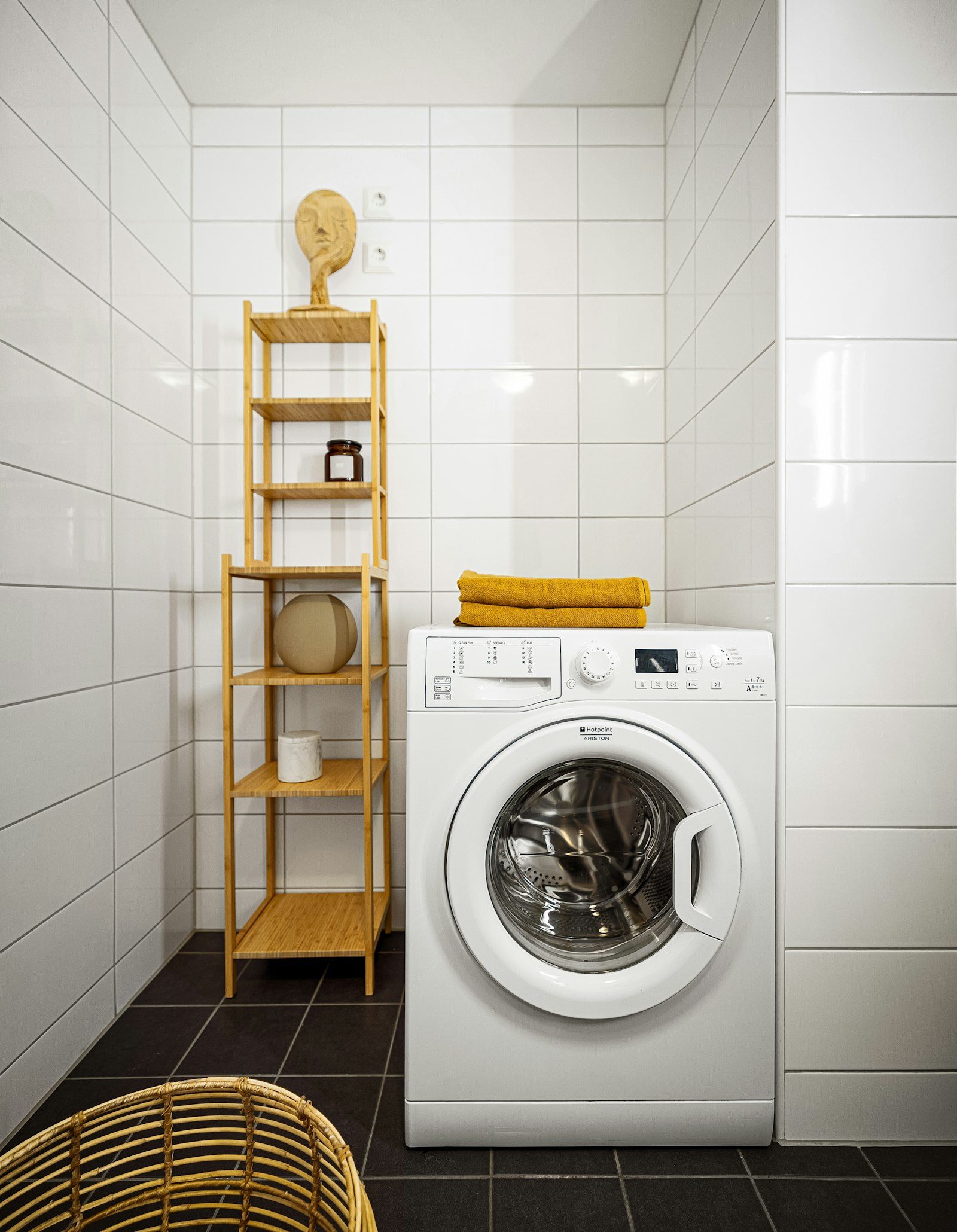
The hardest-working room
The laundry is one of the hardest-working rooms in a home, yet it is often the most neglected. In many older homes in Moe and the Latrobe Valley, the laundry is a small room off the kitchen or back door, with a concrete trough, a washing machine squeezed beside it, and little storage or bench space. In the long, damp valley winters, when clothes take days to dry outdoors, the laundry becomes even more important.
A well-designed laundry makes washing, drying, folding and storing much easier. It can also serve as a mudroom, a place for pet supplies, a cleaning cupboard and a back entry. This guide explains how to plan a laundry that works for your household.
Think about how you do laundry
Start by thinking about your laundry routine:
- How many loads do you do each week?
- Do you use a dryer, a clothesline or both?
- Where do you sort, fold and iron?
- Where do you store detergents, cleaning products and baskets?
- Does the laundry also serve as a back entry, mudroom or pet area?
- Who uses the laundry, and are there children in the home?
Your answers will shape the layout, appliances, storage and finishes.
Layout
Galley laundry
A galley laundry has benches and appliances along one or both walls. It is efficient and common in older homes.
European laundry
A European laundry is concealed in a cupboard, often in a hallway or kitchen. It suits smaller homes and apartments. It needs ventilation, waterproofing and careful planning to fit appliances and a sink.
Laundry and mudroom
A combined laundry and mudroom includes space for shoes, coats, bags and pets. This suits families and rural households, where muddy boots and wet gear are common.
Laundry and bathroom combined
In some homes, the laundry is part of the bathroom. This can save space but involves compromises. Separating the two during a renovation is often worthwhile if space allows.
Appliances
Washing machine
Front-loading machines can sit under a benchtop, creating more bench space. Top-loaders need clear space above. Consider the size, capacity and position of the machine.
Dryer
Dryers can be vented, condenser or heat pump types. Vented dryers release moist air and should be ducted outside. Condenser and heat pump dryers collect moisture and are more suited to enclosed spaces. Dryers can be stacked above front-loading washers to save space, using a suitable stacking kit.
Sink
A laundry sink or trough is useful for soaking, hand washing and cleaning. Choose a size and depth that suits your needs. Stainless steel is durable and easy to clean.
Benchtops
A benchtop provides space for sorting, folding and other tasks. Consider:
- Length. As much as space allows, ideally over the machines.
- Height. Comfortable for standing tasks.
- Material. Durable and moisture-resistant, such as laminate, engineered stone or porcelain.
Storage
Laundry storage might include:
- Overhead cupboards for detergents and cleaning products.
- Tall cupboards for brooms, mops, vacuum cleaners and ironing boards.
- Drawers for small items.
- Pull-out baskets for sorting laundry.
- Open shelves for frequently used items.
- Hanging rails for drying or freshly ironed clothes.
Store chemicals out of reach of children, ideally in high or lockable cupboards.
Drying
In the Latrobe Valley, winter drying is a challenge. Options include:
- A dryer, ideally a heat pump model for energy efficiency.
- Indoor drying racks in a well-ventilated laundry.
- Hanging rails above the bench.
- A covered outdoor drying area near the laundry.
Drying clothes indoors adds a lot of moisture to the air, so ventilation is essential.
Ventilation
Laundries need good ventilation to remove moisture from washing and drying. An exhaust fan ducted outside, a window that opens and a dryer vented outside all help. Without ventilation, laundries can develop mould on walls, ceilings and inside cupboards. This is particularly common in the cold, damp valley climate.
Waterproofing
Laundries are wet areas under the building code. Waterproofing is required to AS 3740 in specified areas, including the floor where a floor waste is installed and walls behind sinks. A floor waste helps drain water in the event of an overflow or appliance leak. Our laundry renovations include waterproofing to the standard.
Floors
Laundry floors should be durable, water-resistant and slip-resistant. Porcelain tiles are a common choice. If the laundry is also a back entry, choose tiles that hide dirt and are easy to clean. Floor wastes need falls so water drains away.
Lighting
Good lighting helps with sorting and stain removal. Include bright general lighting and task lighting over the bench and sink.
Power
Plan power points for the washing machine, dryer, iron, and any other appliances such as a vacuum charger. Our licensed electricians install circuits to suit.
Plumbing
Plan hot and cold water to the washing machine and sink, drainage for the machine and sink, and a floor waste. During a renovation, these can be relocated to suit the new layout.
Finishes
Choose finishes that are durable and easy to clean:
- Moisture-resistant cabinetry.
- Durable benchtops.
- Tiled splashbacks behind the sink and bench.
- Washable paint on walls.
- Slip-resistant floor tiles.
A laundry can also have character with feature tiles, colourful cabinetry or open shelving.
Laundries for families
Families do a lot of washing. Consider larger appliances, more bench space, sorting baskets, storage for sports gear and school bags, and a sink for muddy clothes.
Laundries for rural properties
On rural properties around Thorpdale, Narracan, Hill End and Willow Grove, the laundry often doubles as a mudroom. Consider a large sink for washing boots and tools, storage for work clothes and wet weather gear, and durable floors. Tank water households may prefer water-efficient washing machines.
Laundries for pets
Pet owners might include a dog wash area, storage for food and leads, and a space for beds or crates. A raised shower base with a hand shower makes washing dogs easier.
Combining a laundry and bathroom renovation
If you are renovating both the bathroom and laundry, doing them together can be efficient. Plumbing, electrical and waterproofing trades can work on both rooms in one program, and finishes can be coordinated.
Common laundry problems
- Too little bench space.
- No storage.
- Poor ventilation and mould.
- No floor waste.
- Water damage from leaking machines.
- Dryers venting into the room.
- Cramped layouts.
Laundries in Latrobe Valley homes
Many post-war homes in Moe, Newborough and Yallourn North have small laundries with concrete troughs and limited storage. Some have the laundry in an enclosed back verandah. These spaces can be transformed with new cabinetry, a benchtop over the machines, improved ventilation and proper waterproofing. Newer homes in Trafalgar and Yarragon often have larger laundries that benefit from better storage and finishes.
Enclosed verandah laundries
In many older valley homes, the laundry was created by enclosing part of a back verandah. These rooms can have several problems. The floor may slope outward, as verandahs were built to shed water. Walls may be lightweight cladding with no insulation. The roof may be a low-pitched skillion with little ventilation. Windows may be louvres that let in cold air. The floor structure may sit directly on the ground or on short stumps exposed to damp.
Renovating a verandah laundry often involves more than new cabinetry. The floor may need levelling and strengthening. Walls may need relining and insulation. A floor waste and proper waterproofing are installed. Windows may be replaced for better comfort. Ventilation is improved with an exhaust fan ducted outside. The result is a laundry that is warm, dry and solid, rather than a cold lean-to.
Moving the laundry
Sometimes the best solution is to move the laundry. In some homes, relocating it from an enclosed verandah into a cupboard in the hallway, or into part of a larger bathroom, frees up space for another use, such as a mudroom, pantry or study nook. In others, moving the laundry closer to the clothesline or back door makes daily life easier. Relocating a laundry involves plumbing, drainage, electrical work and waterproofing in the new position. On timber floors, this is generally straightforward. We can discuss the options and help you decide whether moving the laundry is worthwhile.
Laundry chutes and sorting
In two-storey homes, a laundry chute can save carrying baskets up and down stairs, although few homes in the valley suit one. More practical for most households is a system for sorting: pull-out baskets labelled for whites, darks and delicates, or one basket per family member. Sorting as clothes come in reduces clutter and makes washing quicker. Planning space for these baskets under the bench or in a tall cupboard is easy during design.
Ironing and folding
Many people iron and fold in the laundry. A built-in ironing board that folds down from a drawer or cupboard saves floor space and keeps the board within reach. A long, clear benchtop at a comfortable height makes folding easier. Hanging space near the bench lets ironed shirts go straight onto hangers. Good lighting over the bench reduces eye strain and helps spot creases and stains.
Energy and water efficiency
Laundry appliances use significant energy and water. Choosing efficient washing machines and heat pump dryers reduces running demands over the life of the appliances. Positioning the laundry close to the hot water unit reduces the wait for hot water. On tank water, efficient machines help supplies last through summer. Drying clothes outdoors whenever the weather allows remains the most efficient method of all, so easy access from the laundry to the clothesline is worth planning.
Making the laundry pleasant
A laundry does not need to be purely utilitarian. Good natural light, a window with a garden view, a cheerful tile, warm timber-look cabinetry and a few plants can make it a pleasant room to spend time in. Because laundries are smaller than kitchens and bathrooms, they are also a good place to try a bolder colour or pattern.
Book a design consultation
If you are planning a laundry renovation in Moe or a nearby town, book a design consultation. We will look at your space, discuss how you use it and design a laundry that makes everyday tasks easier.
Our bathroom services
- Accessible Bathrooms
- Bathroom Design
- Bathroom Renovations
- Bathroom Tiling
- Ensuite Renovations
- Laundry Renovations
- Leaking Shower Repairs
- Powder Room Renovations
- Shower Conversions
- Small Bathroom Renovations
- Vanity and Storage
- Waterproofing
Book a design consultation
Tell us about your bathroom and we will visit to measure, talk through ideas and prepare a clear written scope for your home.
Book a design consultation